Thursday, December 31, 2009

How To Be Lazy


The secret theme of all creations – from the Bible to a Quentin Tarantino epic, to a level of Super Mario Brothers – is creation. How do we make things? More importantly, how do we go on making things? The persistence of these questions should be obvious to anyone who has ever hung out with artists; but the most fascinating part of it, to me at least, is how integral laziness is to the productivity that obsesses all of us, no matter how many “good” hours we manage to pack in a given day.

I get bored easily. As a childhood animal lover, my Book of Books was a binderfull of celluloid sheaths that my father brought home from work one day. The volume’s empty pages had a pleasant kerosiney smell and glossy texture, like over-tanned balloon-hides. I filled them, one by one, with the Ranger Rick magazines that I’d been collecting since I’d been old enough to demand a subscription. The issues came every four months or so, along with a tape of Northern Exposure episodes and various cooking utensils, in the bubble-wrapped care packages that my grandmother sent us from Somers, New York. I poured over them giddily before placing them, one at a time, in my binder. And from that point on I was always reading them. I brought them to school and to restaurants, where I would store the bulging compendium beneath my chair as I suffered through the meal itself, and then bring it out as soon as there was a lull.


Later, while visiting my great aunt in Maine , I remember realizing suddenly that one possible way to survive the interminable booklessness of family reunions was by imagining that I was a character in a video game, and that each detail of my surroundings (whatever level or “board” I was on/in) was therefore a challenge and opportunity for Mega Man-like personal enhancement. The world was transformed, from a flat surface to a veritable advent calendar of significance. As such, it was inherently interesting: not just a place for books, but a book itself, as readable to me as it had been for Edwards, or Emerson, or that original Mario in the depths of Bowser’s castle, Henry David Thoreau.

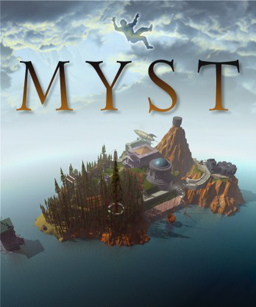
Henry James, whose writing stands in relation to those original side-scrollers with a revelatory vagueness of Mystian proportions, told us, “Try to be one of the people on whom nothing is lost!” In saying this, he is looking backwards to the listmaking Benjamin Franklin and forwards to the paranoid fantasies of Thomas Pynchon, who, in The Crying of Lot 49, described how truly horrible it would be to be trapped in a video game. Or a web for that matter, whose crystalline filaments are after all a metaphor of mobility only for the unmoving spider.

The internet makes Crusoes of us all – but the point here is not that Crusoe is lonely, but that his loneliness is sublimated, to an industry that sees the world as a gigantic tool, something like the cliché about the Native American and his buffalo, every part was useful. The French anthropologist/landscape artist Claude Levi-Strauss makes a similar point about the “primitive” cultures of Brazil when he points out that their language (which named every plant and animal with a precision that makes Linnaeus look like a kindergartner), like their habit of tattooing every inch of available skin, was really a very developed version of what our own culture does now with an indulgent and self-congratulatory hightechitude reminiscent of, say, Transformers: Revenge of the Fallen. The naked world must be covered against emptiness, the same way that the naked head must be covered against rain. This does not necessarily mean that you have to invent a machine for shooting clouds out of the sky.

Nights, of course, were significantly more dangerous. They left me: alright, they had to, I know - but they still left me. And though I had my books – had more of them, actually, now that I’d been sent to a school where books really were the only things that would talk to me – I found my brain and heart spinning like wheels in mud. In any examination of the malformations called “sins”, proportion begins to crop up as an antidote; but where was I going to find proportion? I was an expatriate by birth and uprooted, used to gorging myself. “Candy, anger, sleep,” I whispered, or should have. It probably would have helped to know that someone else knew what I was going through. Of the three, the last is what bothered me when I visited my family in Cairo, in their new home, their first home without me. Jet-lagged, I read through the night or wandered around the apartment trying not to trip over my sister’s new cat. One day I woke up (from a nap? Or was it the middle of the night again?) to see the sky outside churning like a cement mixer. The khamsin, or sirocco, which I watched cake a donkey standing inexplicably beneath my window with a slow layer of lard-colored dirt. The donkey didn’t move.

Of course it didn't: it didn't see any way out, didn't see any way to see a way out. Sloth, like gluttony, produces a nausea that is both spiritual (not totally sure what that word means, but hopefully you do) and physical. It is the result, rather than a preventative, of industry: not work, but rather the effort that apes the procedures of creativity without ever really managing to hit, through exploration and bravery, on any real root. It smacks of diligence, or duty; of the obeyed letter rather than the animating spirit. In my experience as a writer, there is a point in every day when we know what we should be doing. Sometimes that “should” is simply sitting down at the desk, and we don’t, because we feel like we need to research more, or write a blog entry, or read another chapter… But more often, I think, the should happens within the writing. Not knowing what we have to do isn’t depressing, so long as we have faith that whatever we’re doing will eventually reveal that; what’s depressing is when we know what we have to do, secretly, but keep deciding not to do it. We hold back by telling ourselves we’ve gone forward. Isaac Babel (another devotee of patience) put it in a way that no amount of exposition can exhaust: “One’s fingertips must grasp the key, gently warming it. And then the key must be turned once, not twice.” Sloth is what you feel when you’re turning the key so much, and so fast, that the gears are stripped.

The secret insight of Christian theology (and others probably: I'm only trying to say what I know) is the deep sterility of sin: the way it knocks us out of the very world that it promises to open. The question, then, is how we get back in – and not once, but again and again, since by the time we realize the value of what we’ve lost, it will probably be gone forever, at least in that form. In Pynchon's seemingly-closed riddle of a universe, the underground postal service is called WASTE. Henry James would be appalled. But ignoring this reality provokes, I think, a disappointment with life that leads us to a watching-TV-for-9-straight-hours despondency. It is one of our culture's best kept secrets that it cultivates this state at the same time that it pretends to relieve it, by eliminating waste. But there is no eliminating waste, at least for us. For God - or whatever you want to put in that place - maybe. But then the next question to ask is, is God the most bored being in the universe, or the most interested?

Wednesday, December 30, 2009

Gluttony


I grew up an expatriate in the third world, meaning that early on I grew gluttonous in a way that I still have trouble with. Let me explain.

The only place to get Snickers bars in Lusaka, we thought, was at the commissary, a building that I never saw, but which I imagined as a sort of cross between a military bunker and Candyland, except that instead of passing through it visitors were content simply to browse the shelves - forever, if possible. In order to do this you had to be American, meaning you had to work for the American embassy. Families, like my own, who were employed by less reliable organizations were forced to shop at the local Zambian supermarkets, where the controlled chaos of the African food industry made every visit a harrowing adventure. Aisles shifted and items appeared, or disappeared with a dreamlike suddenness that would have taken a full-fledged Joseph to comprehend. Boxes of South African breakfast cereal stood like soldiers at attention, or better yet, like men impersonating soldiers and trying not to laugh as my brother and I inspected them. Their cardboard (the reverse sides of which we could see, since many of the box-tops were torn open) was unbleached and their mascots harried beneath sagging speech-bubbles. “Tommy the Tiger says: ‘You will enjoy my flavored cornmeal!’” Except that, next to his radiantly chesty American original – a stencil of which I had made in one of my notebooks the previous summer and now kept under my pillow, along with two issues of Gamepro and a MacDonalds placemat – Tommy looked haggard and even a little guilty-looking.

America, like heaven, was somewhere else. Still, there were windfalls. In the middle of the melee my mother clung to our cart-handle like a dowser clutching her dowsing rod. She held her head high, her flared nostrils sifting through the layers of spoilt milk, okra, and split-open rice bags until they caught on something interesting. Sometimes this was nothing we could use. A bottle of curry-sauce stamped with letters that looked like tiny pictures of different types of noodles. A shoebox sized container of pickled shark meat. Or the tiny chewable ginger ties that were delicious, sure, but which, because of their packaging, smell, and general grit, my brother and I rejected immediately as Not American, meaning Not the Real Thing.

Given this general atmosphere of difficulty, you would think that stumbling onto a box of Snickers bars would have caused my family immense joy; but if anything, I remember feeling only terror. Afterwards, in our boiling Volvo (its inside smelled like a gigantic sponge, at least during the rainy season), we poured over our carton like priests before an oracle, examining each little detail. Where had it come from? What did it mean? And did the fact that splendor had entered our lives mean the favor of the gods, or their curse? Either way, we all felt the presence of something bigger there, lying under our hands with ominous generosity, like a case of candles that we had bought and then discovered was full of dynamite…

The literary thing to say here would be that my un-American childhood created a vacuum of expectation that the real America could never satisfy; but the truth is that my childhood expatriation wasn’t un-American: it was hyper-American. So, after fifteen years of living on the continent that presumptuously assumes its name, America has never disappointed me, because I haven’t found it. I eat and eat and eat and it sucks, because despite all the resources at my disposal, I can’t find the flavor I’m looking for. I spend hours on the internet trying to find out what was in the Mezoe orange juice (battery acid, grapefruit rinds, and didn’t it always seem to suggest just a bit of salt?) that I habitually poured out on the concrete at the American Embassy School of Lusaka, because it lacked the nectar-like sweetness of my classmates’ Juicy Juice.

This Christmas, my dad the unreconstructed expatriate (Dakaar, for now at least) very generously gave me his old MacBook. His undeleted iTunes library includes a bunch of Eagles songs, which is funny because, like that great and admirable homebody the Dude, I loathe the Eagles more than fruit flies and freezing rain combined. “Take It Easy”, “Get Over It”, “Learn To Be Still” – but then isn’t this the point? The West coast’s gluttony for stillness and relaxation is the three-ton Buddha we place on our scale in the hope that it will counterbalance a deep and inborn anxiety. But that’s narcosis, not absorption. As a deeply anxious person myself, I know that the worst thing anyone can say is “Don’t worry.” Why not, I want to scream back? And where does your sense of calm get you but further immured, further removed, further stuck, in other words, in the hell that is disconnection and detachment?

(and alright, I can’t believe I’m going to do this, but the Eagles even showed us what that place looks like, right? It’s the Hotel California, a legitimately brilliant marriage of form and content that is far more hellish than even a above-average high-school term paper can reveal. Listen to it again: it will ruin for you, in order, 1) Don Henley, 2) guitar solos, 3) classic rock radio stations. This is not a song about California: it’s a song about art, or the failure of ambition in art, or what happens when you succumb to the gluttony of satisfactions that some concierge has handed you, but which you yourself take no pleasure from)

To rush into the third act here (since, let’s be honest, an Eagles reference should sound like a death knoll, for anything, anywhere): the good thing about gluttony is that it feels like a search, whereas the bad thing about gluttony is the way that it promises an end to searching and so focuses us on the goal, rather than on the process itself. Like each of the seven deadly sins, it is deeply idealistic and therefore unforgiving, meaning that it justifies itself by saying that everything we can actually see and experience is not It, not Worth It, not the Real Thing. By doing this, it robs us of our enjoyment and so alienates us from the very food that we need to survive. It allows us to accept our fear of being human, which condition, with all its pain, can be our sustenance.

Gluttunous writing is not hard to find - although it's important, I think, that we distinguish it from writing that is legitimately hungry and therefore overflows through pleasure, rather than disgust. Stephen King and James Clavell are only two examples of writers who write as if the only purpose of opening a book were to finish it, as the only purpose of opening an XXL bag of Dorritos is to be able, half an hour later, to scrunch that same bag up and throw it in the trash. I don’t say this Puritanically, or because I dislike Dorritos (I pretty much worship them, which is why I can pretend to know what I'm talking about). I loved and love both King and Clavell, among others (Timothy Zahn, anyone?), and in many ways owe my love of reading to the complete immersion that their worlds offered me when I was a kid. But I know I have to be careful. I remember what those Snickers bars tasted like when we finally opened them, and what they led to, which was not even more desire, but the despair of knowing that I would never be able to eat enough. The suspicion that we had been duped again, and that these were not the actual Snickers bars I'd heard so much about, but some strange simulacrum, a box of fakes.

I want to live. More importantly, I want to want to live here. I grow impatient, these days, with things that suggest I should want to live somewhere else. Or language that suggests, by its use or misuse, that language is not important. Books of gluttony exhaust, but books of appetite – I’m thinking here of books like 2666, or The Castle, or Moby Dick – both satisfy and provoke, by some strange and beautiful paradox. At the heart, for all their searching, I think they embrace what they are, no matter how limited that is. Kafka said that patience wasn’t just a virtue, but the virtue: not a humiliated waiting, but its own kind of fulfillment. Osip Mandelstam: “To speak is to be forever on the road”. We are all on the road. And, being on the road, our only recourse is to speak, and in doing so transform the alien corn into Keats’s “alien corn”, which is both haunting and gorgeous. The Real Thing, which I like because it shows something I suspected even then: that art is what makes us real, brings us closer, rather than the other way around.

So speak.

Monday, December 28, 2009

Manners


Growing up, at the same time that it was always my mother and my father, it was also always my mother or my father.

There was nothing Greek about this; it happened at the dinner table and then in my head, as I thought about the one place where the two of them seemed most divided. For while my mother orchestrated meals with the ritual care of a batter about to step up to the plate, my father had haste. He ate like a vacuum cleaner and then started picking things off our plates with the graceful, self-delighted lunges of a velociraptor stumbling upon a field of gerbils. Sensing a soft spot in the usually clear hierarchy of our life, I followed his example – mostly because (unbelievably enough) I actually ate more quickly than he did, at least if the dish in question was peanut butter and jelly sandwiches or cereal.

It wasn’t, for the most part, which meant that I had to find a way to get rid of it. Over the years, I refined my technique like an apprentice burglar. Like all great artists, I indulged in flourishes, but only when I felt like they were subordinated to an over all design. My tools were few but effective: a large napkin (preferably made out of a resilient material like cotton or polyester), a glass of milk (to mask the taste of those bits I had to eat in order to make the trick believable), and, if necessary, a pair of very, very deep-pocketed sweatpants (which, unfortunately, I wore a lot of in those days). When caught, I took a quick second to gauge the situation and then pleaded misunderstanding or repentance, depending on the parent.

According to my mom, I had no manners. But the truth was that even then, I was simply confused and, confusingly, perhaps even a little excited by the places in my life where it was not really clear what type of behavior would be normal and what would not. To say that Americans are particularly stupid on this topic misses the point, since it is exactly our lack of manners that makes us the most mannered people in the universe. Live in New York New York, or Portland Maine, and you’ll see this equally: life in these places is a texture of densely woven gestures that exist in and of themselves but at the same time mark the gesturer as a member as surely as a lantern sticking out of said member’s skull would mark him/her/it as a fish known as the deep sea angler, which survives, like a poet in Hollywood, by adopting the manners of something that its prey’s usual environment (water) finds alluring (light).

Another way of putting this is to admit that you’re always either on the inside or the outside of any group - and then looking back, I think that if there was one vulnerability that my mother had and my father didn’t, it was this fear of being on the outside. She didn’t want to be shunned, revealed as an outsider, and because of this she decided that it was much safer and better not to put oneself in harm’s way. America, the same country that had left her this bursting, heartfelt, debilitating idealism, had given her a perfect way to deal with it. Be an outsider. Be unique. Be the single member of a country whose boundaries only you can make out, and then inhabit other memberships with the sort of barely-perceptible disdain that insinuates just how impressive your jacket lining would be, if they could only swim fast enough to see it.

The great southern puppeteer/Bible saleswoman Flannery O’Conner followed Henry James (himself a lifelong expatriate) by parsing fiction’s flow into arterial Mystery and veinous Manners. But aren’t manners – that is, the huge mechanism of what we, as a group and individually, find usual – the greatest mystery of all? A Tolstoyan experiment: right now I am sitting on my couch writing a blog entry as my sister’s dog throws up in his dog bed. Sounds reasonable enough – but then turn the situation just a bit towards the “cowlike gaze” and we see, aha, the mystery of furniture! A lump of shaped and molded softness serving no discernable purpose! A tiny animal that has been bred, over centuries, not for its adaptive capabilities, but for sheer and utter uselessness! It’s all so ridiculous; but at the same time, the heart of the mystery here is the way that, sitting here, doing this ridiculous thing (blogging!) in this ridiculous environment (“Vermont”!) on this ridiculous object (a sofa-bed!) find absolutely none of it ridiculous. In fact, the truth is just the opposite: it is all normal. And it is all normal for me because somewhere in my brain and body lurks the idea that it is all normal for everybody else.

Manners are not the enemy: manners are the door, the jug that invites the water in the way a tree invites birds, or a house people. And there is no other way. Turn from the spirit if you want to, but every break will be partial and every move from that point on an attempt to move to some higher communion, perhaps possible, perhaps not – perhaps only lonely, since the other citizens of your imaginary republic do not yet exist. Milton’s Satan says “Which way I fly is hell/ Myself am hell”, and though it might be interesting for a second to see this as the first artist in Western biblical translation, I think that saying this misses the more massive point of Satan’s fundamental sterility. Adam and Eve broke the rules, and we have a sense that this crack in the world is somehow fundamentally related to our subsequent creativity. But they also repented – that is, they made peace, asked forgiveness, tried to re-enter the family. Satan broke everything, repented nothing, and so ended up creating nothing, except the brokenness.

Tuesday, November 17, 2009

You're Funny

"Are you smiling?"

"It's not going by fast enough."

"Thanks for reminding me, but, no."

"You're already in bed."

"Yeah, I was gonna say."

"Did you? No? That must be nice."

"Mm-hmm."

"I just think it's totally unfair that you're in bed and I'm here."

"What?"

"Yeah, so?"

"Okay."

"What?"

"Okay."

"So what did you do tonight? Anything fun? No."

"What did you guys make?"

"Sounds like fun."

"Nice."

"Well... "(muffled)

"What's wrong with this picture."

"Well I won't text you then at two thirty in the morning."

"What?!"

"At two thirty in the morning."

"You're silly."

"You're gonna check out what?"

"I refuse to do that. I'm into mafia wars."

"So apparently I don't have to say thank you anymore?"

"Why?"

"Whatever."

"I just, yeah, think I have to say thank you, I appreciate you."

"If you say so."

"No, just, I just wanted to say thank you."

"Nothing. Doing work on the computer."

"I'm just appreciating the fact that I have time that I can call you, and talk."

"Mmm hmm. Yeah. It's just, if my cell phone rings, I have to answer it."

"No."

"No. I just wanted to hear your voice."

"I'm not use to this."

"What?"

"It's like, I want to pinch myself."

"Oh really."

"Okay."

"Yep."

"Well, I'm sure you want to go to sleep."

"What?"

"Yeah I guess."

"Ok. Yeah."

"Ok."

"Ok."

"Ok love you too."

"Ok."

"Ok."

"Love you too."

"Love you too."

"Ok."

"What the heck is that supposed to mean?"

"Ok love you too. Goodbye."

Monday, November 9, 2009

Shit Eating Grunts

Fellow Travellers,

So I haven't written a thing of my own in over four months. My skin is pasty, my mouth is dry, and I find that when I look down, the normally unembarrassing span of my torso has been transformed into something as strange and foreboding as a martian landscape. What's happened to me - more importantly, what's happened to us? And when it goes, does it go forever, or is there a way to get back what was once so important in your life?

A better man than I would have taken his ideas of departure and return from Greek myths, the New Testament, and the novels of Joseph Conrad. But for me, the formative influences - at least the ones I can pin down - are all either cinematic or musical. As I look at the things that have gone out of or come into my life, Walt Disney is my Edith Hamilton and Bruce Springsteen my Joseph Campbell. Everything dies, baby that's a fact. But maybe everything that dies someday comes back.

To the point: one thing both rock and roll and movies teach you is that the only way out of the desert is through it. Ezekiel ate shit - can you imagine that? The man actually ate shit. I wonder if he started with a little bit, just a little smidgen that stuck on the end of his spoon, tilting over like an old man falling asleep in his chair as Zeke stared and stared. Or did he just dive in, attacking that shit like it was his last meal. Relishing it, in other words. I'd like to know, and feel like it is both a canny elision and an unfortunate caesura in the Books as we know them. What does it feel like to be hungry?

I don't know what the fuck's going on. I don't want to trivialize the feeling of being cut off from creative sources by making it seem like simply one more topic for a blog post...but then why not, at this point? If the only way out really is through, then why not begin with the trivial?

What do you think? Are you out there?

Howl?

Monday, August 17, 2009

Pheidippides Was A Real Man

Well, boys, I figured out over the weekend that I have to drop out of the marathon. The shin splints (that I think I was whining about when I was down at WWC graduation) haven’t gone away, and my acupuncturist/physical therapist said I need total rest until they don’t hurt at all anymore, which could be up to two weeks. Then I can start with one mile, and then I increase that by 10% every time I run. I did the math, and that does not get me to 26.2 by November 1.

I know we’ve talked ad naus. about sports, but indulge me for one more post.

This sucks, because the marathon was a big thing in my life. I don’t really have that many things: my cipher of a day job, my writing, my friends and family (but no family of my own), and the marathon. It was sort of a parallel goal with writing, you know? ‘Today I will complete one task with a very specific measure and one with no real measure at all.’ One made the other easier to bear.

But also it sucks because I feel like a coward. I could run the marathon. I could swim for a few weeks and then get up to ten miles, let’s say, and then try to fudge it. A couple of friends have fucked their legs up trying to do similar things, but the very high likelihood is that I’d be more or less fine. A real man would find a way, right? and other people overcome way way worse things than this to run it (e.g. missing limbs).

There are legitimate medical reasons to drop out, but there’s also a big part of me that doesn’t ever want to run the marathon. That part wants to have a sick day for the rest of its life and watch TV and eat mochi balls and drink crème de menthe. I’ve been training myself not to listen to that part when I’m running. So Mr. Crème de Menthe is loving the shin splint excuse.

And if I do follow the advice of my physical therapist, I’ll feel fine on race day. That’s the most galling thing. I won’t be on the sidelines on crutches, I just won’t be in good enough shape to finish.

I also committed to raising $2500 for a charity to get into the race. I not only have to let them down, but I also gave them my credit card as security against the money I don’t raise, and I don’t know if they’ll give me dispensation for an injury.

Anyway, part of me writing this on Heart Arcade is just to bitch to my friends, and I know in the grand scheme this is small potatoes: running races only happens in a life that doesn’t have any life-threatening threats. But I’m writing about it here also to wonder about discipline and structure with writing, too.

As I said above, running was a temporary structure for writing, but I just haven’t known what I’m doing with writing for a while. And I mean this less in an existential way and more in a practical way. Am I really trying to write a book of short stories, or am I just starting a thousand different things to distract myself from the hard work of digging into anything?

I have a novel idea that I’m not that fired up about, but am I not that fired up because I’m just too scared or lazy to get into something that involved? Pretty soon it’s going to be a year since I graduated, and it’s not like I have five polished stories up and ready to go. And just as the shin splints are a helpful excuse for Mr. Crème de Menthe, so is the well-known mysteriousness of the writing process.

It would be helpful to have a metric, is what I’m saying. ‘Getting a Novel Into the Western Canon’ is a little grandiose (and the Western Canon ain’t what it used to be); ‘Two Hours of Writing A Day’ is a little too local. ‘Making Work That Causes Readers I Respect to Laugh In Recognition of Truth’ is probably the closest thing, but I don’t know exactly what that looks like on a Tuesday when I’m tired and want to watch re-runs. ‘Three Finished Stories by the End of the Year’? ‘Always Have Two Stories in the Inboxes of Magazines, No Matter What’?

I guess dropping out of the marathon has made me take another look at exactly what I’m trying to do, and where the runway lights are.

I know I’m supposed to be the wise sage after living for six more months in The World than you guys have lived, but what lights are you flying by right now?

Sunday, August 9, 2009

Rock the Rock

So at this point in the writing/sports conversation, if it's not getting too stupid and reductive for everybody, I feel like I should mention my burgeoning interests in 1) mainstream/slightly not mainstream American sportswriting, and 2) Late 20th century Black Mountain-style poetics.

The first is last-two-years new, but surprisingly bullish: for someone who NEVER watched, or really even played team sports as a kid, I've found myself digesting a surprising amount of articles, books, and podcasts about them. Puzzling, at first (especially to myself); though upon further reflection, I think I understand what's going on. Sportswriting - good sportswriting that is, or at least the kind that I've found myself gravitating towards - is not actually about sports. It's about storytelling. Fuck the universities: the purest, most refined, and most probing narratological analysis right now is going on smack in the middle of the national consciousness - and as a writer (read: someone interested in stories and how they're made) I've found it more than just a little fascinating to watch how this discussion frequently plays out, branches, and spirals back to ideas and forms that seem to directly effect and fertilize my own endeavors.

Sports (and here I'm talking, not just about the sports you play, but about the sports your watch, consume, enter and live in: sports media, in other words) is a language. As with most languages, the success or failure of initial willed acclimations is often beyond the knocker's control (witness my repeated, pig-headed, but still fanatical attempts to like jazz. I'm talking stacks of CDs, Ralph Ellison essays, constipated, cocktail-sipping concerts, not to mention hours upon hours spent trying to hear what ever the fuck it was I was listening to, and yet still it's no dice. I don't even not like jazz: I simply can't hear it, which is to say, I can't speak it. For me to pass judgment on it would be like an American tourist passing judgment on Swahili). But in cases rich and overwhelming (meaning, any case worth your time), I'm a big believer in the guide. A Virgil, a map: that person or entity who can take you by the hand and tell you what's good, what's bad, what you should be looking for/give you a level ground of understanding, which you can then keep or dismantle as your tastes develop.

So far, I've had two ridiculously predictable, and yet totally infallible, sports-related guides: Bill Simmons and freedarko. What I find in each is, essentially, what I find in both: entertaining writing that is simultaneously about both a fascinating and complicated "obvious" topic (sports, or to be more specific, professional basketball), AND a hidden, secret, gnostic undertopic (writing). And there's the rub - for in using the medium of language to get at the heart of something inherently non-linguistic, I find, these two writers (or more than two: freedarko is actually a collective) inevitably seem to end up talking about writing, stories, history, creation.

(I'll dispense, for brevity's sake and under the banner of Tolstoyan familiarity, with a long proof on this point. Read FD's post on Celtics point guard Rajon Rondo (which contains the sentence "I've long maintained that point guards are like writers, whose effectiveness is determined not by their own personal ability to put the ball in the basket but to turn the court into their own dark funhouse and make the opposing team see the game on the point guard's revised and ultimately manipulative terms"), and try and tell me it isn't all about the flow-state/staticity argument we've been having. Or listen to Bill SImmons's tete-a-tete with Chuck Klosterman and see if there isn't something there pertaining to narratology and the storymaking of popular culture)

Anyway, words, words, words: but isn't the fascinating thing about sports, and about thinking about writing as a sport, the way that it acknowledges and respects the strange, mysterious core of all performance, be it linguistic or otherwise, while at the same time acknowledging the importance learned technique/inherited ability play in the coddling, cradling, and execution of those performances?

TO wit: Charles Olson's poetry may be bland, idiosyncratic, and imagistically poor hippie-babble, but when it comes to announcing the poetic sport, I find him one of the most entertaining and insightful of near-contemporary color men. Reading his essays (which poets from all over the world map credit with opening up the poetic field, turning their understanding of literature as something about to something), I get the feeling that I'm not just watching literature, but somehow participating it; that the energy inherent in poetry is somehow being transmitted to me, like a signal or electric charge. The parallel difference here: watching basketball as a spectator (which I do), and watching basketball as someone who will then go down to the local court and pull some crazy cross-over move whatever (or at least, will practice it until he can do it in a pick-up game). This, for me, is one of the greatest parts about being a writer: when I read, I'm not just being entertained, I'm being taught. Something is teaching me how to make. But then, to push the idea a little further, isn't it possible that, given the right guides and a sharp enough inquisitiveness, attention paid to ANY creative endeavor will end up teaching us about our own? Watch basketball, read sportswriting, listen to someone's grandmother talk about how to make a pie, hear a hobbyist hold forth on the peculiar pleasures of Amazon frog-collecting: in each case, there is something there that will talk to you about your own art/life/rhythm. One of my/our previous blog obsessions was the way that writing needed to be a conduit into, rather than away from life, and I feel that repeating itself here - though maybe the many-roomed-house metaphor needs to be subtilized. Not rooms, but worlds, constellations, whose motions parallel one another, but which touch only through our own inhabitation of each of them. Any real act will teach you about all the others.

Olson as point guard: "It is unbearable what knowledge of the past has been allowed to become, what function of human memory has been dribbled out to in the hands of these learned monsters whom people are led to think 'know.' They know nothing in not knowing how to reify what they do know. What is worse, they do not know how to pass over to us the energy implicit in any high work of the past because they purposely destroy that energy as dangerous to the states for which they work - which it is, for any concrete thing is a danger to the rhetoricians and politicians, as dangerous as a hard coin is to a banker." (The Human Universe)

Now, leaving off the obsession with monetary value (typical of even the greatest village explainers), watch the way that quote unlocks the "high work of the past", turning it from monument to generator, something we plug into. Which is the mystery at stake here, right? How do we create? Or, how do we harness our own unique combinations of talent and history in a way that allows us to put that fucking rock in the hole? In my own personal experience this is tricky, not least because you must first find a way to discover/create your position on the literary team - but in the moments that you do it? In the moments that you fit your art or life or whatever as smoothly as a key fits a lock or a bat fits a ball or a puck fits the net or word fits the world?

Olson is in the Emersonian line of energy transmition - but then again, so is Simmons. So are we. America is obsessed with renaissances and rebirths and revivals: not for nothing have we had (by the most conservative of estimates) three Great Awakenings in this country. A blog, written by beginning artists, about writing and life, must necessarily be obsessed with creation. But then, isn't its own making the secret subject of every made thing the world over? And don't we knock to be admitted, if not now, then please God, someday?